
My Cart
Your Shopping Cart is Empty


In the world of high-fidelity audio, few components command as much reverence and mystique as large power tubes. Originally engineered for the demanding world of radio frequency (RF) transmission, tubes like the 211, 845, 813, and 811A have found a second life in the hearts of audiophiles. These "transmitting tubes" are prized for their linearity, power handling, and the unique sonic character they impart on music. They represent a departure from common audio tubes like the EL34 or KT88, operating at dangerously high voltages and requiring specialized amplifier designs.
This article delves into these four iconic tubes, comparing their origins, technical specifications, and sonic signatures. We will explore the classic rivalry between the 211 and 845 triodes, and contrast them with the rugged, high-power 813 beam tetrode and the high-gain 811A triode.

Before we can compare Triode and Ultralinear operation, it's essential to understand the components and principles at play. The magic of these modes happens within the output stage, a circuit whose design philosophy starts at the speaker and works its way backward to the tubes themselves .

If you've ever delved into the world of tube amplifiers, you've likely heard the term "push-pull" output stage. It's the workhorse design for achieving high power and low distortion. And at the very center of this design lies a crucial component: the push-pull output transformer.
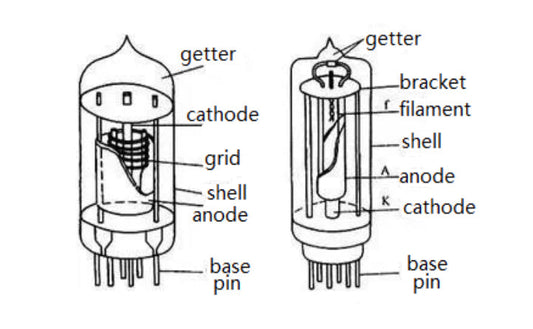
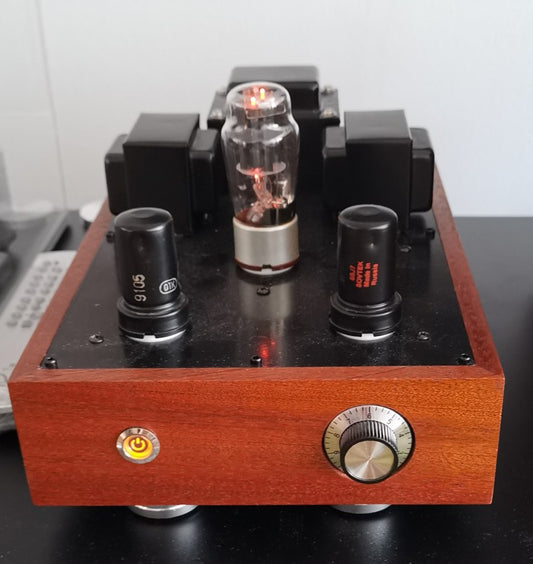
The blog collects some tube models and give them a brief, also you can do a simple replacement, but for details, you need search them and get detailed parameters and curve.


When selecting an electronic tube, we should determine the appropriate tube type according to the characteristics and requirements of the specific application circuit firstly. Secondly, it should be ensured that parameters of the selected tube meet the requirements of the application circuit, especially the limit parameters must have sufficient margin.

